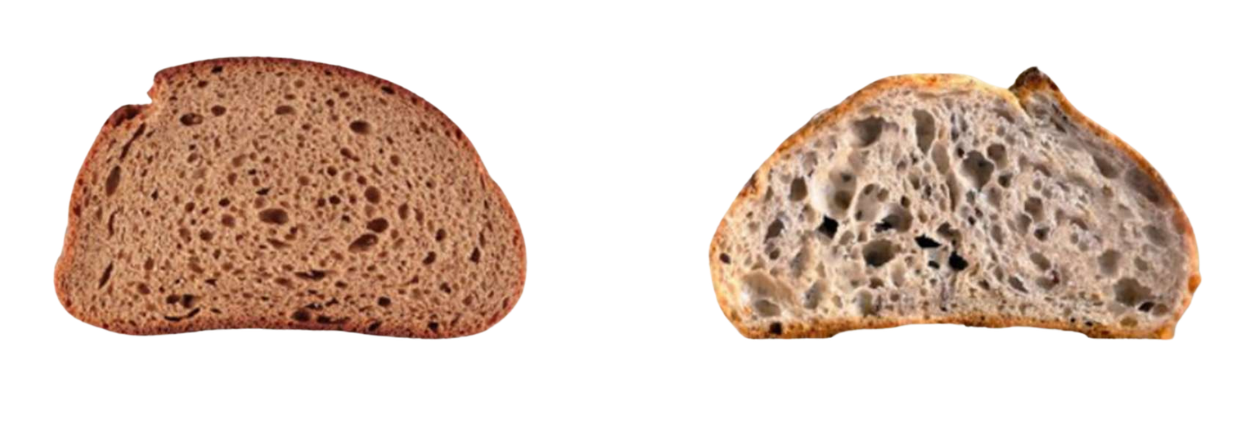

Dense Rye Sourdough vs Light Sourdough
Many bread lovers had the misconception that Sourdough bread should have big honey comb holes.
It's important to address a common misconception: big holes in sourdough bread do not necessarily indicate better quality or health benefits OR dense bread with no honeycomb consider not a sourdough bread.
In fact, both can be sourdough bread but using different types of flours and baking technique. Large holes can be a sign of over-proofing, which can lead to a less chewy texture and potentially more difficult digestion. Small holes developed from sourdough bread means gluten not sticky and not chewy so the enzymes are going to have easier time digesting the gluten.
Sourdough bread has gained immense popularity in recent years, not just for its unique tangy flavor and rustic texture but also for its perceived health benefits. While many tout it as the "healthiest bread," it's important to understand the science behind these claims and distinguish fact from fiction.
The Fermentation Factor: A Key to Sourdough's Benefits
The primary reason sourdough is often considered healthier than other breads is its fermentation process. Unlike conventional breads that rely on commercial baker's dry yeast, sourdough undergoes a slow fermentation using a starter – a mixture of flour and water containing naturally occurring wild yeast and lactic acid bacteria. This fermentation process is where the magic happens, leading to several potential health advantages:
Improved Digestibility:
The lactic acid bacteria in the starter pre-digest the starches and proteins in the flour, making the bread easier to digest. This is particularly beneficial for individuals with mild gluten sensitivities, as the fermentation process breaks down some of the gluten proteins, potentially reducing bloating and discomfort. However, it's crucial to note that sourdough is not gluten-free and is unsuitable for people with celiac disease.
Increased Nutrient Bioavailability:
Fermentation breaks down phytic acid, an antinutrient found in grains that can hinder the absorption of minerals like iron, zinc, and magnesium. This means your body can better absorb these essential nutrients from sourdough bread.
Lower Glycemic Index:
Sourdough bread tends to have a lower glycemic index than other breads. This means it causes a slower and more gradual rise in blood sugar levels, making it a potentially better choice for individuals managing diabetes or those looking to maintain stable energy levels.
Gut-Friendly Properties:
The fermentation process creates prebiotics, which are types of fiber that feed the beneficial bacteria in your gut, promoting a healthy microbiome. This can contribute to improved digestion, a stronger immune system, and potentially even better mood regulation.
The World Bread Project Published 2025
The World Bread Project- “ The First Ingredient” Published 2025 by award winning Dutch photographers and writers, Mirjam Letsche & Hans de Clercq collaborating on an International Artisan Bakers photo project, an initiative of Johan Pater, fouth generation baker capturing beautiful stories with a colorful insight into the lives of bakers and their craft worldwide.
https://www.breadprojectworldwide.com/